The “Parenting +” program, which would be intended for adoptive parents, who want to increase awareness of the issue of adoption and improve parenting skills, acquire new knowledge about raising adopted children and skills to help the child understand and deal with the difficulties arising from adoption.
The program would be conducted through lectures, discussions on suggested or free topics, group work, interactive exercises in which all members of the group are involved, exchange of experience, as well as with the guests of adoptive parents and adopted young people.
The educational part of the program would include the following topics:
What does the adoption process in Serbia look like? Where do you begin, who should you contact, and what can you expect on your journey to becoming a parent?
The “Rođeni iz duše” Foundation organizes free quarterly online informational workshops for individuals and couples who are considering adoption or have already started the process.
The workshops are led by experienced professionals from Serbia’s social welfare system who work directly with adoption procedures. They provide reliable information about the legal process, eligibility assessments, preparation of prospective adoptive parents, matching children with families, and the adjustment period. Special attention is given to participants’ questions, concerns, and the emotional challenges that may arise throughout the adoption journey.
The first two workshops were held in July and October 2026, and the next workshop is planned for the first quarter of 2027.
Follow our channels for updates and registration announcements.
An informal form of support, through networking and connecting adoptive parents who are just entering the adoption process or are in the initial stages of developing an adoptive family with adoptive parents who have gone through the adoption process and use their experience to provide support and understanding.
The benefits of mentoring are normalization of feelings, removal of feelings of loneliness and isolation, and emotional support. The mentors would present facts about their experiences, the problems they encountered over the years as well as the ways in which they overcame them, what were the difficulties and trials they faced in different stages of family development, who they turned to for help, from whom they received guidance and support, etc.
The perspective of a family with many years of adoption experience is a significant resource in the process of networking and empowerment. Mutual support through connecting with people who share the same experience leads to a sense of relief – that they are not alone.
The aim of the project is to organize quality support programs for adoptive families to successfully deal with the various challenges that child adoption entails through mutual connection and exchange of experiences in dealing with specific challenges that are not inherent to biological families, as well as increasing educational capacities and understanding of the adopted child’s parenting, ensuring the stability and well-being of the adopted child and members of the adoptive family.
Adoptive parents are very lonely in dealing with various adjustment problems, they are left to their own devices, because they do not know who to turn to for help and support. Insufficiently prepared and without adequate information about possible adjustment difficulties, they often perceive the problems they encounter as an expression of their incompetence in their parental role.
Even when the adoption is successful and stable, the legacy of earlier experiences or new life events may require additional support and a special approach in different developmental periods (adjustment problems – challenging behavior of children, pressure on partner relationships, especially in situations where adaptation does not go easily and when the child has multiple needs, the arrival of a child and the constant need to satisfy the child’s multiple and complex needs causes a disruption in the way of life and mutual relationships that also need adjustment, the challenges of parenting an adopted child and the constant stress that it causes risk of marriage breakdown and adoption…).
The unique challenges and difficulties related to the adoption institute impose the need for post-adoption support, through support programs, where, among other things, the development of good communication skills and the development of behavior modification strategies, as well as the development of realistic expectations and additional education about parenting in general, and a better understanding of the parenting of the adopted child, will be done, all with the aim of ensuring the stability and well-being of the child and members of the adoptive family.
Support programs will be implemented through:
Support groups, individual counseling, mentoring of experienced adopters, online and telephone counseling, implementation of various educational programs and legal counseling.
Support programs aim to make adoptive parents feel more competent to face the situations and challenges that adoption brings. They should help the adoptive parents to see the world of adoption through the eyes of the child, to develop realistic expectations about themselves and their children, to become aware of the resources available to them in the community, to become ready to seek and accept support and help in the later stages of the development of the adoptive family through informal, semi-formal and formal-professional support, then to develop the knowledge of how to bring their child’s needs closer to others, and how to advocate for the child’s needs, but also to learn to take care of themselves.
The special value of the support program is that it will result in informal mutual support through connecting with people who share the same experience (a sense of relief that they are not alone). Such support programs for adoptive families aim to prevent the risks brought by the specificity of raising an adopted child.
Support programs are intended for interested potential adopters and adoptive families, regardless of their place of residence.
In September, we organized our first gathering of adoptive families at Salaš Antero, bringing together more than 20 families.
It was a day dedicated to meeting one another, sharing experiences, building connections, and creating new friendships. What made this gathering especially meaningful was the opportunity for adopted children to meet and spend time with other adopted children, connect with one another, and discover families whose stories are similar to their own.
For adopted children, these experiences can play an important role in developing a sense of belonging, acceptance, and understanding. At the same time, they provide parents with a valuable space for mutual support, honest conversations, and shared experiences.
As part of the gathering, we also hosted an expert-led session on the importance of play in strengthening the bond between parents and children, exploring how play can help build trust, emotional closeness, and a sense of security within the family.
This gathering marked the beginning of a community where no adoptive family has to feel alone on their journey.
Because support doesn’t end with adoption. It remains just as important as families grow together.
As part of its ongoing support program for adoptive families, the “Rođeni iz duše” Foundation organized an online educational workshop titled “Roots and Wings”, dedicated to understanding early childhood development, the impact of previous life experiences, and the importance of creating a safe, nurturing, and supportive family environment.
The workshop was led by Marija Bajat, a social worker, and Prof. Dr. Ivana Mihić, a member of the Foundation’s expert team. Drawing on their professional expertise and practical examples, they helped parents gain a deeper understanding of the developmental and emotional needs of adopted children.
Special attention was given to the importance of the first years of life, during which the foundations of emotional, psychological, and social development are established. The discussion explored how early experiences of neglect, separation, and the absence of consistent parental care can affect a child’s development, behavior, emotional regulation, and ability to form close relationships.
One of the central topics was understanding the child’s perspective and embracing their individuality. Every adopted child enters a family with their own life story, experiences, needs, and patterns of behavior. The role of adoptive parents is not to erase that past, but to understand it and, through patience, consistency, and emotional availability, help the child develop a sense of safety and trust.
Through the symbolism of the well-known story The Ugly Duckling, the workshop also explored themes of accepting differences, belonging, and the influence of the environment on a child’s developing identity. A key message was that genetic heritage and early life experiences are part of a child’s story, but they do not necessarily determine their future.
The workshop also addressed the difference between parental expectations and a child’s actual needs, the importance of secure attachment, and the role of a stable, loving, and supportive family environment in a child’s continued development.
Through educational workshops like this, the Foundation aims to provide adoptive families with ongoing professional guidance, practical knowledge, and a supportive space to better understand and navigate the unique challenges of adoptive parenting.
–
Our workshops are short, thematic meetings intended for adoptive families, as well as anyone who wants to better understand parenthood and the challenges it brings.
Through concrete and everyday topics — from emotions, behavior and tantrums, to family relationships and child development — we create space for learning, sharing experiences and support.
The workshops last 90 minutes and are designed to provide practical knowledge, new perspectives and the feeling that you are not alone in the challenges of parenting.>
Workshop topics include:
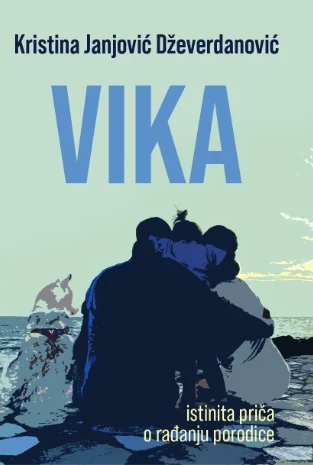
Kristina Janjović Dževerdanović's book is born out of the need to share an important experience openly, accurately and without embellishment: the experience of longing for a child, unsuccessful attempts, making a decision on adoption, encountering procedures, institutions, waiting, uncertainty, one's own fears and prejudices of the environment - but also the experience of creating a family. The book is written from a shared perspective - of Kristina and her husband - providing an insight into the experience of both sides - male and female view of the entire struggle: from attempts and disappointments, in vitro fertilization and adoption, to partnership and all personal and joint ups and downs.
This is not a story about idealized parenting. Nor is it a story about solutions. Nor is it a story of emotions that come in the expected order. This is a story about how parenthood is built: through decisions, through responsibility, through patience, through trust and through love that doesn't come all at once, but grows together with the relationship.
In this book, Kristina writes about her and her husband's path to adopting a daughter, about everything that is rarely talked about clearly and without pathos: about in vitro fertilization and questions that remain unanswered, about the moment when adoption becomes a natural choice, about meeting the system, about the long wait, about ignorance, about learning, about vulnerability, about what it really means to welcome a child who already carries his experience of the world.
The special value of this book is that it does not offer solutions, it does not share advice, it does not try to romanticize anything. She testifies. It helps. Frees up space for conversation. It is intended for those who are thinking about adoption, those who are going through the process: parents, experts, but also everyone who wants to better understand what a family really is.
From this need for understanding, support and education was born the Foundation "Born from the Soul", which publishes this book with the same intention with which it was written: to help others not to feel alone in difficult and important life experiences.
This book is not just a personal story. It is also a valuable testimony about adoption in our society - about procedures, misconceptions, waiting, hope and about how much one truth, told without noise, can mean to others.
Buy the book online at the Delphi bookstore
Clicking on the button below takes you to the book purchase page.
Some prejudices don’t hurt adults. They hurt children.
Every time someone says that an adopted child “doesn’t belong to anyone,” asks, “Who are their real parents?”, or believes that family is defined by blood, genes, or the color of your eyes, they are not simply expressing an opinion.
They are building yet another barrier between a child and a family.
And every prejudice we break down opens another door for a child.
A family is not a biological fact.
A family is a choice.
The choice to be there.
To protect.
To love.
To stay.
That is why this campaign is about more than adoption.
It is about the kind of society we want to build.
A society where no child grows up behind the walls of an institution because adults were trapped by prejudice.
This is not just the cause of one foundation.
It is not the cause of one family.
It is not only the cause of adoptive parents.
It is a cause that rises above all our differences.
Because it is about children.
That is why today we are not asking you to adopt a child.
We are asking you to embrace adoptive families.
Because when we change the way we see adoption, we do more than change minds.
We change lives.
We are united by the belief that every child deserves love, acceptance, and a sense of belonging.
RSD: 340-1000457331-94
EUR: 340-1000457681-14
USD: 340-1000457684-05
EUR:
SWIFT (corespodent bank):
GIBAATWG
ERSTE GROUP BANK AG, Wien, Austria
Benificiary bank:
SWIFT: GIBARS22
ERSTE BANK A.D. Novi Sad, Republika Srbija
Benificiary info:
IBAN: RSRS35340000100045768114
Name: Fondacija Rođeni iz duše
Address: Nova 12/15, 21208 Sremska Kamenica, Serbia
USD:
SWIFT (corespodent bank):
SWIFT: GIBAATWG
ERSTE GROUP BANK AG, Wien, Austria
Benificiary bank:
SWIFT: GIBARS22
ERSTE BANK A.D. Novi Sad, Republika Srbija
Benificiary info:
IBAN: RS35340000100045768405
Naziv: Fondacija Rođeni iz duše
Adresa: Nova 12/15, 21208 Sremska Kamenica, Serbia